
What is China’s Great Firewall?
How the world's largest censorship apparatus works — and how to circumvent it



Compartilhar
The Great Wall of China, one of the great wonders of the ancient world, was erected to protect the kingdom from invading armies. Today, another wall exists, no less tangible even if unseen. China’s Great Firewall is the largest and most sophisticated censorship system in the world. Controlling both content traffic at the service level and infrastructure, it separates the Chinese internet from the rest of the world, limiting Chinese people's free access to information and free expression.
In fact, the internet in China should be understood more as a national intranet, which is heavily regulated and isolated from the rest, than as a global internet. And this, of course, is no accident: it is ideologically and politically motivated.
“Anti-China forces in the West have constantly and unsuccessfully attempted to exploit the internet to ‘overthrow China’... Our ability to maintain our position and win this battle on the internet has a direct influence on the ideological and political security of our country.”
– Xi Jinping, speech at the National Propaganda and Ideology Conference, August 2013
Thus, the maintenance, expansion, and modification of China’s Great Firewall is an active state policy, varying according to state interests.
How the Great Firewall works
To understand how a surveillance and censorship system of this scale works, let's briefly recap the global architecture and infrastructure of the internet.
Internet Service Providers (ISPs) are responsible for connecting the local networks of individuals and organizations to the internet. ISPs basically operate as gateways to other parts of the global network, managing the hardware necessary to establish and maintain these connections.
Unlike most of the world, ISPs in China are not private companies, but entities directly linked to the government, in particular China Unicom and China Telecom. Both constitute the backbone of the Chinese internet, that is, the main infrastructure that manages everything from national data traffic — through network cables, servers, and routers — to international traffic, through gateways and intercontinental submarine cables.
Using techniques such as IP filtering, DNS domain blocking, and deep packet inspection (DPI), these companies are able to detect and block content deemed sensitive or undesirable by the Chinese government, both within China and on international connections. This means that when Chinese people try to access foreign websites or communicate with people outside China, their data must pass through these control points where it is monitored, analyzed, and, if necessary, blocked or limited by the Great Firewall.
Therefore, censorship occurs at multiple layers: ISPs, data centers, and national traffic exchanges. It ranges from content filtering, throttling, service blocking, and even complete internet suspension. All of this is implemented uniformly by state-owned companies under centralized government control.
Finally, it is worth noting that the greatest regulation occurs at the international exchange points of the Chinese internet backbone (Beijing, Guangzhou, Shanghai, Urumqi, Xi'an). However, the Great Firewall operates nationally.
Overcome internet censorship
75% off the world's most private VPN. Até 10 dispositivos.


Nym's Noise Generating Mixnet

Sobre os autores
Pedro Sydenstricker
Escritor da ComunidadeCasey Ford. PhD
Revisor técnicoTabela de conteúdos
Continuar lendo...
Internet censorship: Diagnosing a global threat
Dr. Navid Yousefian analyzes who is behind global censorship measures, and what their goals are. (Part 1)
Tecnologias de censura e resistência: Uma corrida armamentista global
A Nym tem o orgulho de apresentar sua mais recente pesquisa sobre o estado da censura global
NymVPN’s roadmap for censorship resistance and security
How NymVPN will provide the tools to leap over the walls of the internet
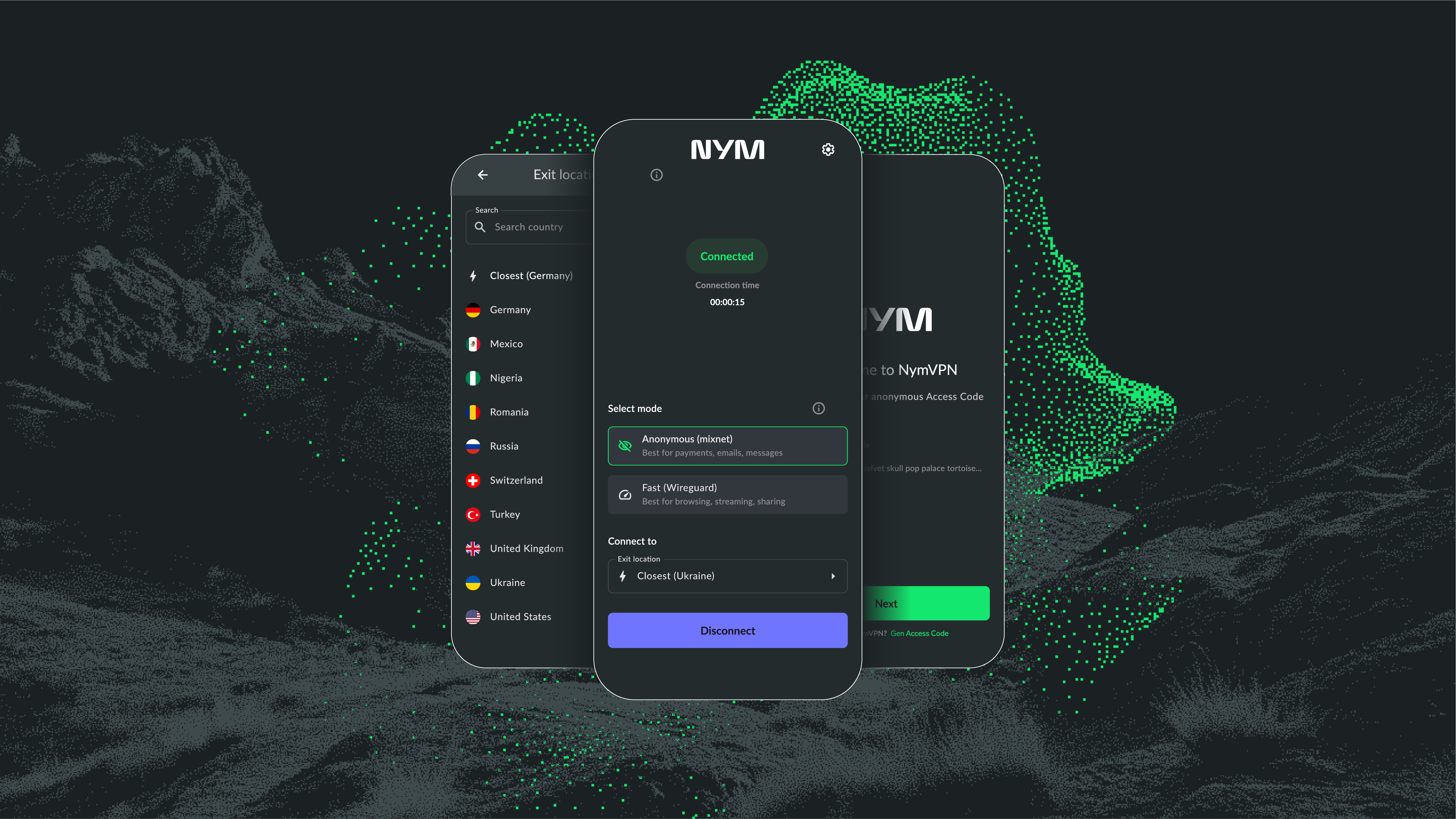
Nym é mais que uma VPN
Redes Privadas Virtuais (VPNs) têm sido a solução ideal para proteger o tráfego online por décadas.